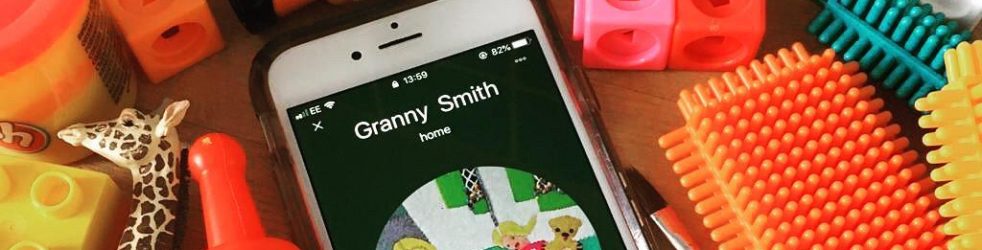
As a toddler, my granddaughter Daisy always had her hands full!
Whether clambering over a play structure or sitting in her buggy, she never went anywhere without grasping something in her hands.
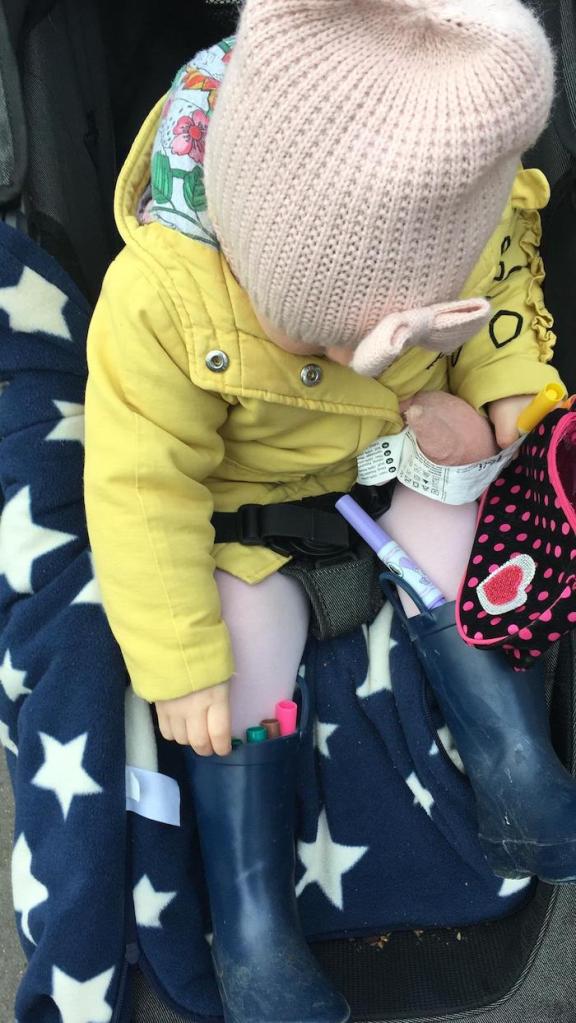
On one occasion, I found Daisy dressed to go out to the park and was reassured to see that she had her wellies on. Then I noticed she was carefully pushing some pens into the tops of her wellies, presumably so they were available to hand whenever she needed them!
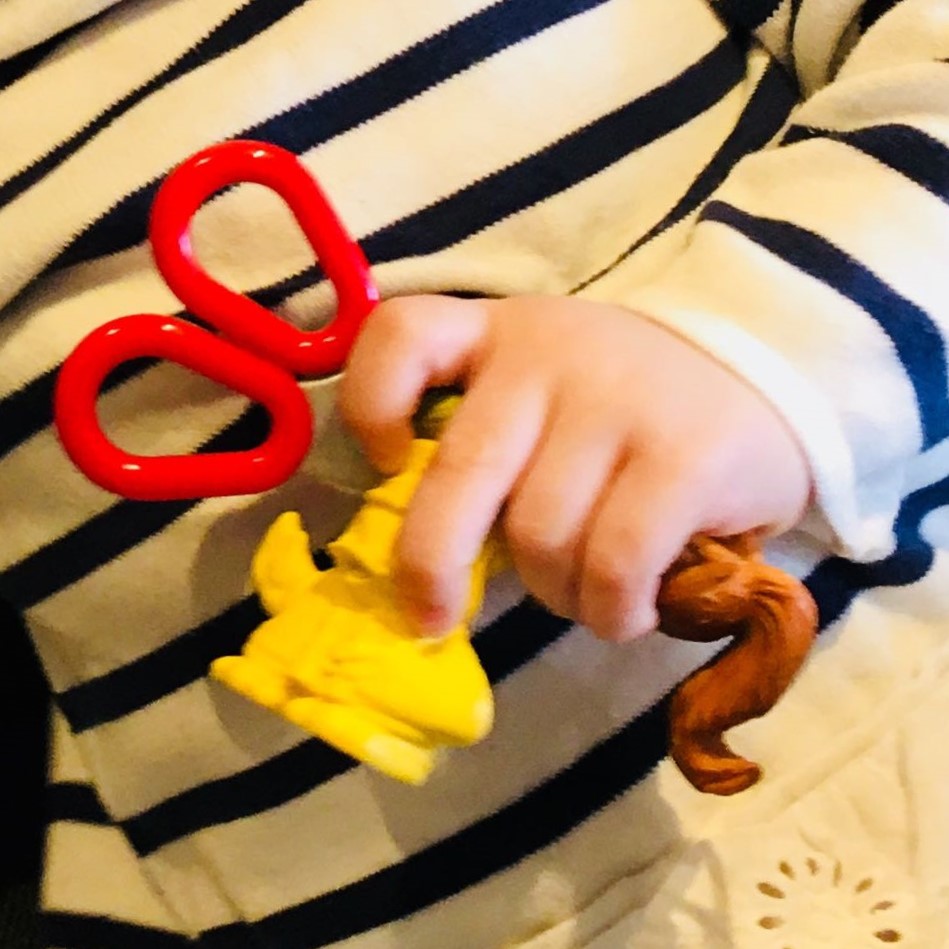
Many children appreciate having their favourite ‘comfort items’ nearby. It could be a blanket, a dummy, or a cuddly toy. Daisy has always drawn comfort from having her hands – and wellies – full of small-world toys and manipulatives (manipulatives are physical tools that help learners to understand a topic – they are ‘hands-on’ learning aids).
It was seeing this behaviour that inspired me to create a little activity for Daisy – one that might spark her imagination and avoid a situation where her footwear was stuffed with uncomfortable plastic!
Daisy’s discoveries
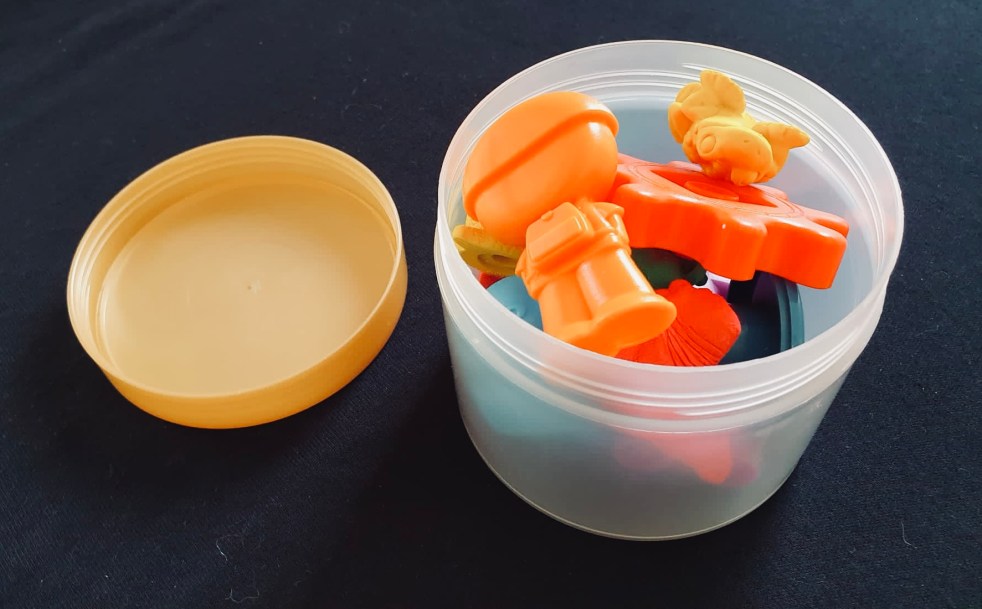
I decided that I could fill up a container with her favourite small-world toys to put in my handbag before we set off on an outing. Looking through my recycling, I found a small container (previously used for body lotion) with a screw-top lid, that would be perfect for the job. I cleaned it thoroughly and set to work.
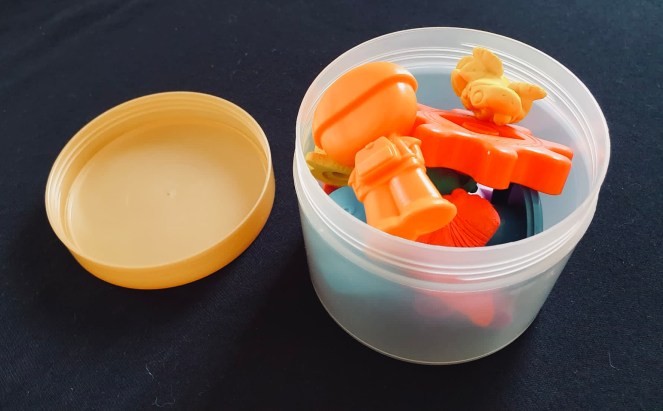
For Daisy, reaching into my bag and finding her container of toys rapidly became a favourite activity. After a few weeks I realised that, for her, part of the attraction of the container was to take the lid off and discover what was inside. I began to fill it with new items so that the contents became a surprise for Daisy.
When Daisy was a toddler, wherever we happened to be, she spent a lot of time just taking each toy out of the pot, one at a time and then putting them back into the container. This is a fun activity for developing fine motor skills and hand-eye coordination.

In fact, when Daisy was still very small, I would turn the pot upside down and hide a toy out of sight. She would reach over and lift the pot to see what was underneath, building on her understanding of object permanence.
Sorting, separating and subitising
The container became so popular that I began to keep it in my bag whenever we spent time together. It was ready to pull out if we were on a train, if Daisy was feeling bored during a long car journey or – as happened last weekend – when we were waiting for a meal in a restaurant.
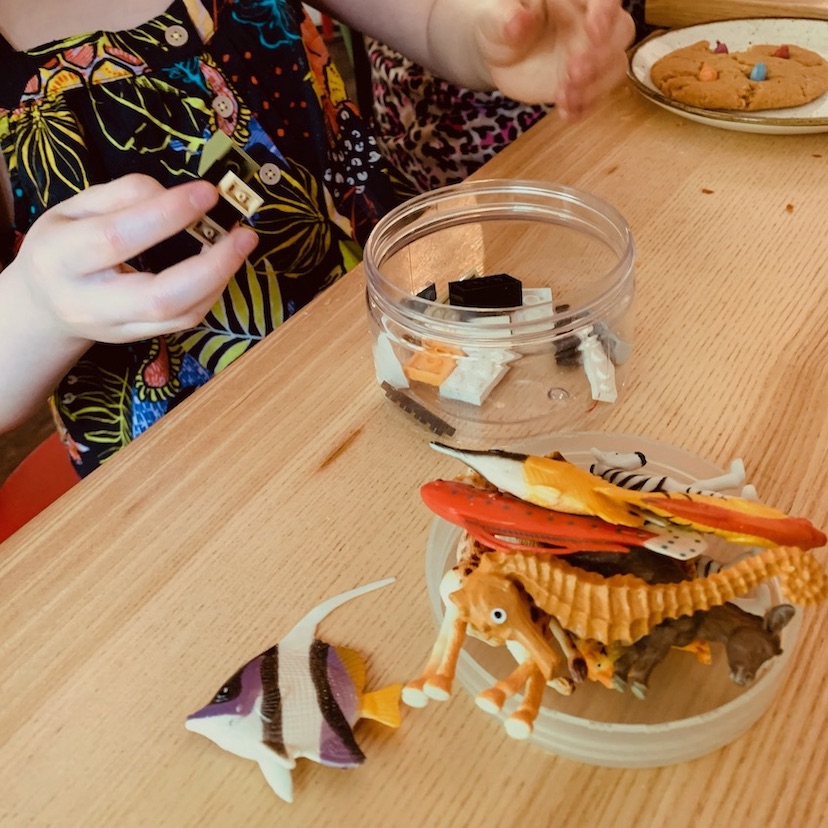
I’ve changed the contents for every visit, which has increased Daisy’s anticipation; she’s always eager to investigate and find out what’s inside this time!
I tend to add combinations of toys, so that Daisy can sort them out. This could be animals and fish, insects and animals, letters and coloured shapes, or buttons and counters.
There’s usually an opportunity to practise subitising with the groups. And I always aim to match the combinations to her age and changing interests.
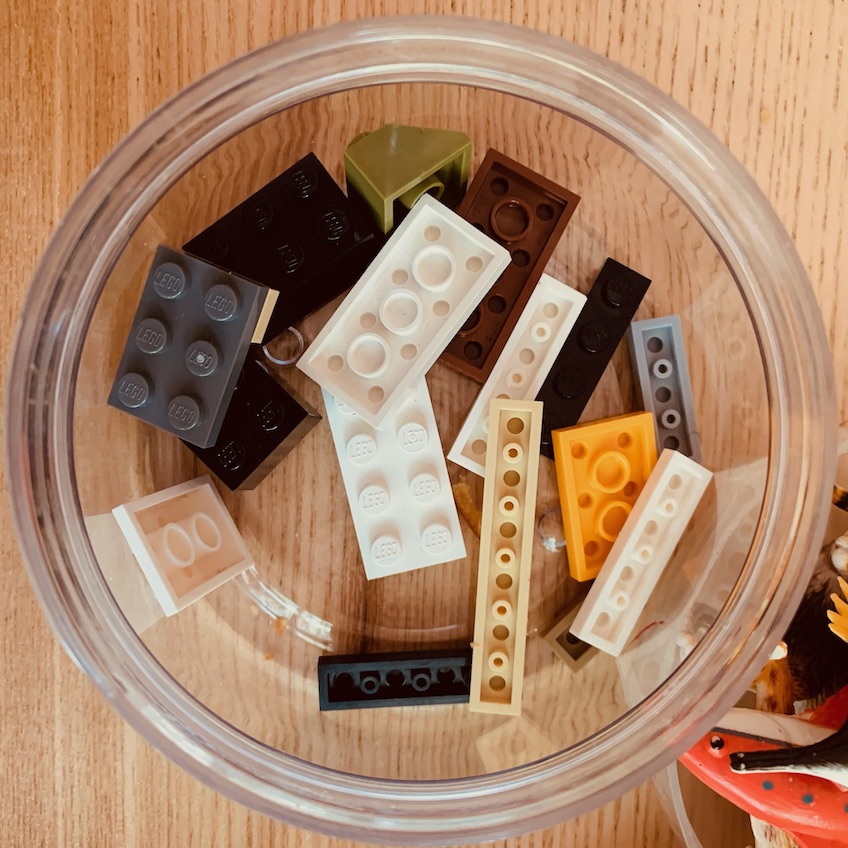
With this in mind, recently I’ve put in several differently sized Lego bricks. There’s not enough space in the container to hold the bricks needed for a substantial Lego set. Instead, Daisy can use the small bricks to connect together to make a rudimentary animal, a letter shape, a number shape, a tower, a robot, etc. We can also count the raised ‘lumps’ on each brick and practise counting in twos.
Container conversations
Last weekend, Daisy began by carefully taking the items out of the container and grouping them together: she put the animals in a pile, laid out the fish across the table, and separated some Lego, along with a letter-shaped pretend cookie.
I took the opportunity to ask Daisy to look at the pile of fish and say the amount she saw (subitising, not counting), then I asked her to repeat the process with the pile of animals. In the past, these conversations have also led us on to talking about odd and even numbers.

At other times, we have used the contents to talk together and to tell a story, involving the contents of that container. The letter-shaped pretend cookie gives us a prompt for naming things – animals, fruit or vegetables – that begin with that letter.
At a recent summer fair, Daisy acquired more small items from a lucky dip stall. On another outing, these items can appear in the container and we can have a conversation about where the toys came from – the same applies to the little extras that come home in birthday party bags, etc.
For Daisy and me, it’s a small container filled with never-ending possibilities!
Granny Smith says…
- I used a container that I might otherwise have left in my recycling bin. As an alternative, you could use one of the small containers with clip-on lids that are readily available for food storage.
- I would advise against using containers that are medium or large. These require a lot of items to fill and this can prove impractical and inconvenient to transport. The fun and interest is best focused on investigating a small number of play items.
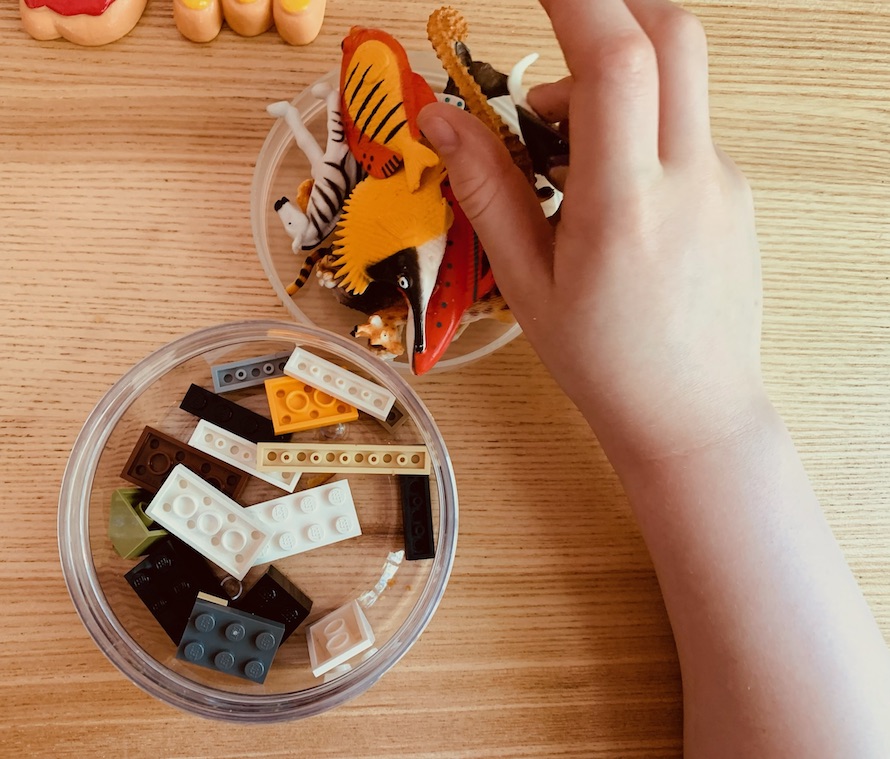
 Granny Smith's Diary