
A Guest Post by Daisy’s Dad
It’s August and UK schools are closed for the summer holidays. Many parents will have one thing on their mind now: trying to find ways to occupy their children.
This often means balancing work schedules with the availability of helpful relatives and childminders, and organising daily routines around the opening hours of various clubs and camps.
At home, it frequently involves trying to engage your children in a new activity – especially when the delights of CBBC have been exhausted, when it’s too wet to go in the garden, and when restlessness is setting in.
One activity that we’ve used successfully in recent weeks is the ‘recycled’ Lego set.

If you have any reasonable quantity of Lego at home, this is an easy activity to set up. It only requires a couple of small bags or an empty container.
Inspiring Constructive Play
Between what she’s inherited from me and what she’s been gifted on special occasions, Daisy has amassed an impressive quantity of Lego over the past few years.
Unlike some of her other toys, Lego is an evergreen interest. It dovetails perfectly with her other fantasy play interests – Ninjago, Harry Potter, Minecraft – and this means that, more often than not, a new toy is often also a new Lego set of some sort.
While a few large, robust Lego creations remain intact for consistent play, most of Daisy’s bricks and minifigures are eventually assimilated into a general mix that we store in a set of stackable transparent containers.

Of course, Daisy is free to dip into these containers at any time, but over time they have become ‘part of the furniture,’ and a giant box of Lego can sometimes feel like too much choice.
Luckily, we found a way to spark Daisy’s imagination when she needed a little inspiration.
A New Career in a New Lego Town
Like many children, Daisy loves opening a new Lego set: flicking through the instructions, opening the numbered bags, and assembling the little minifigures first. Then she becomes engrossed in the construction process, keeping us up to date on her rapid progress through the booklet.
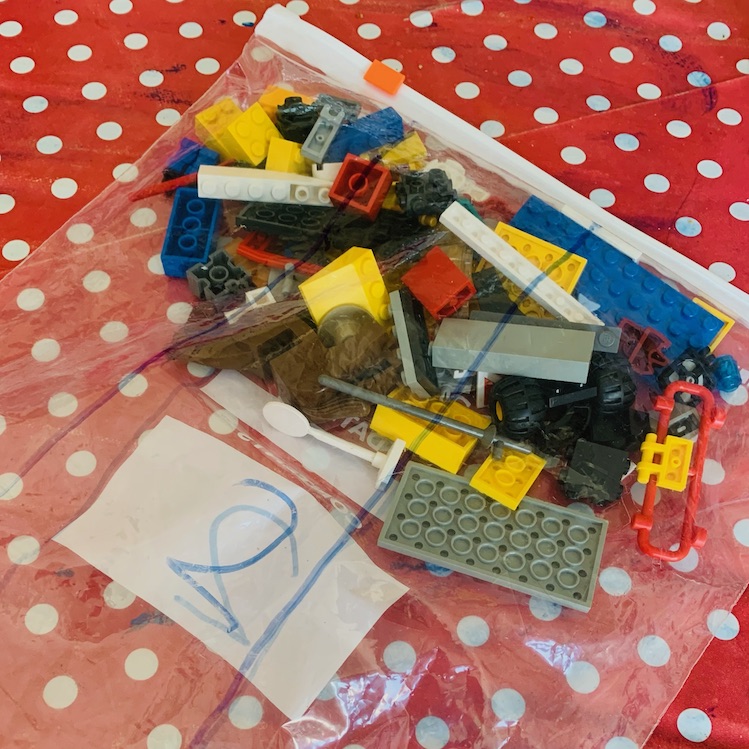
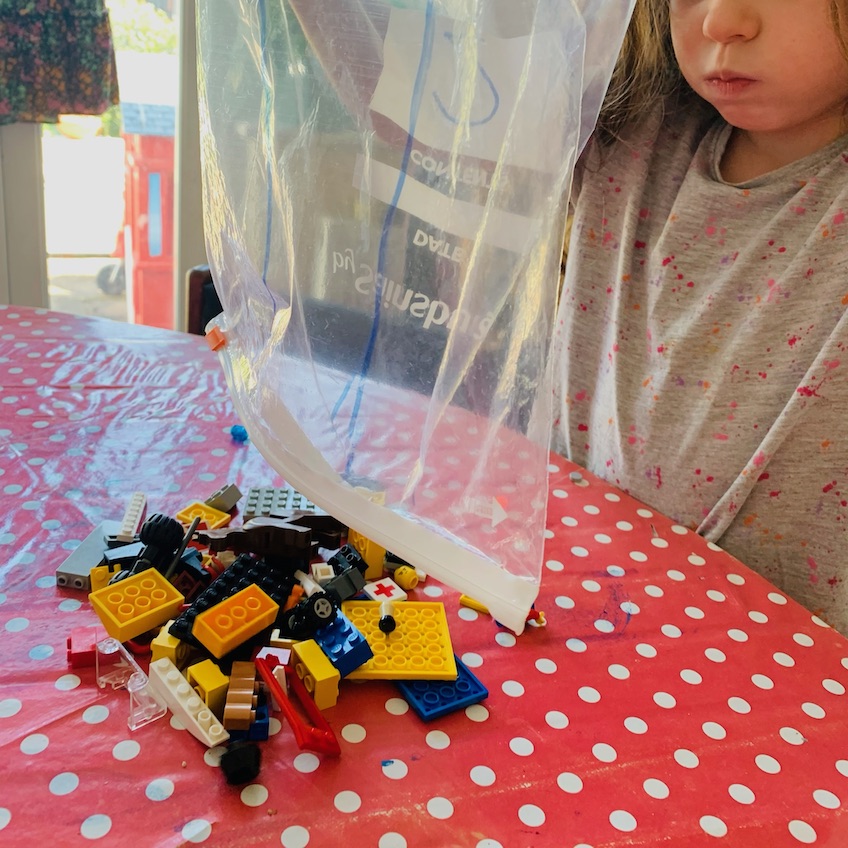
One morning, we got creative: we took a couple of food storage bags, numbered them, filled them with a random selection of Lego and then sealed them – creating something not far off the bags that come tumbling out when Daisy opens a brand-new set.
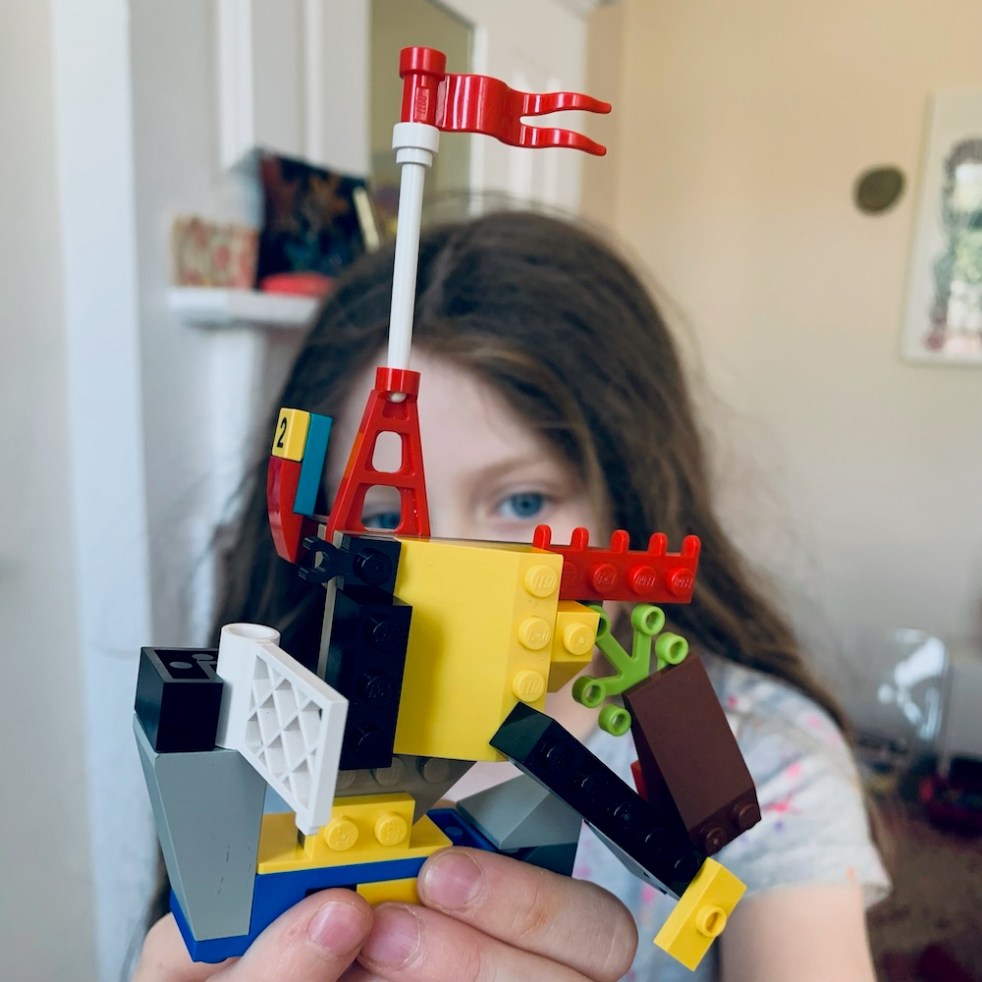
Using her first packet, Daisy made an abstract-looking boat.

With the second packet she became more engrossed in narrative play, and created several structures.
“This is my Lego set,” she announced when she was finished. “It’s called The Jobs You Can Do.”


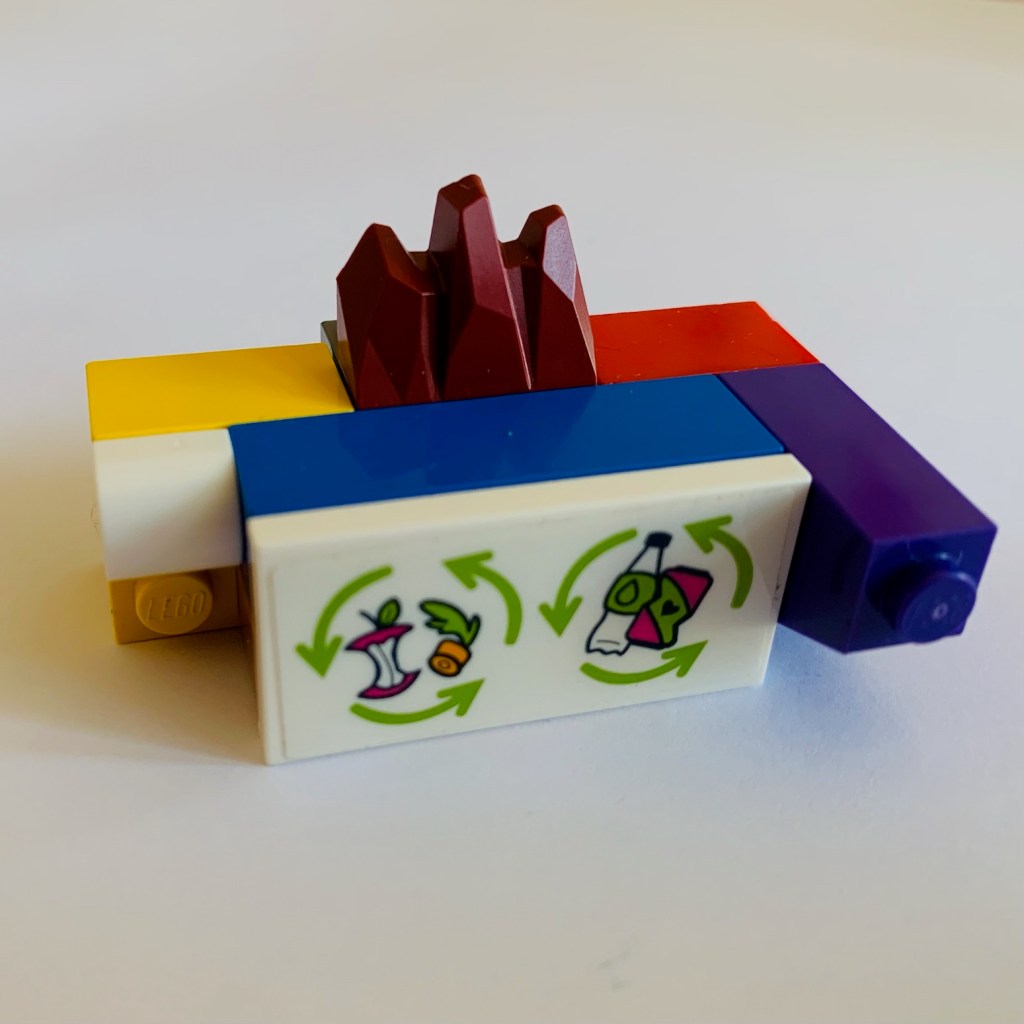
‘Jobs You Can Do’ – left to right: builder, doctor, recycler.
Using the pieces, she had set up multiple ‘stations’ that represented different professional paths. It looked like a little careers fair for Lego people.
Daisy listed the jobs aloud as she guided us around the themed areas: builder, mechanic, police, firefighter, doctor, recycler, horse-stronger.
Hang on, ‘horse-stronger’?
I looked at her creation: a horse harnessed to a complex hinged contraption.
“They help horses be stronger,” Daisy said by way of explanation, tensing her muscles and making a strained expression. I understood.
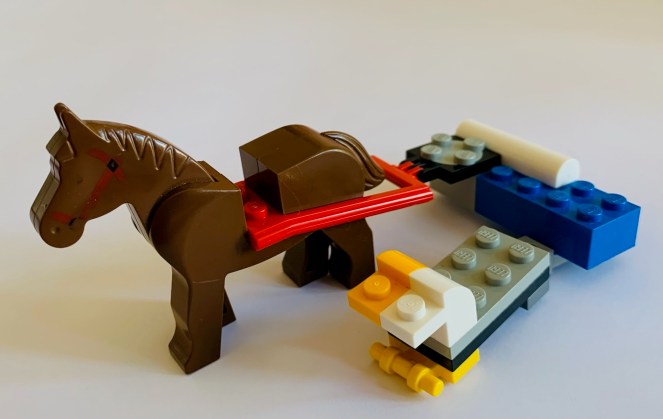
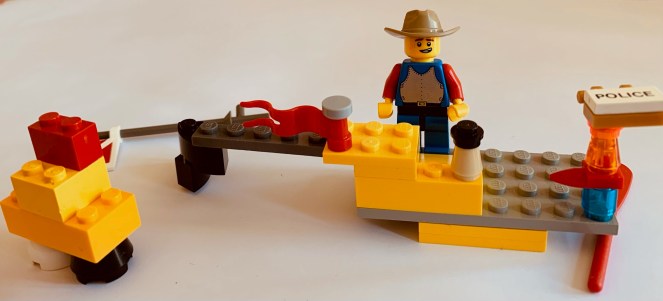
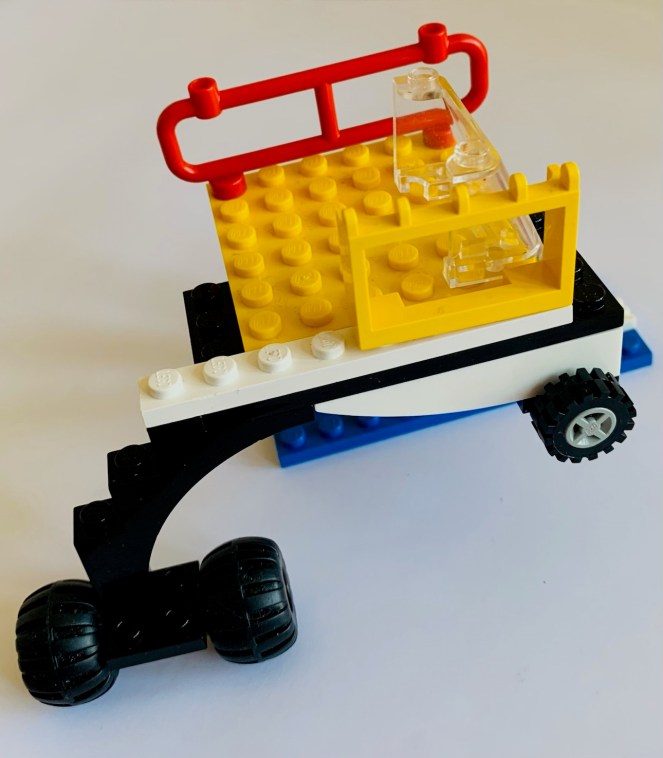
More ‘Jobs You Can Do’ – above, from top: horse-stronger, police, mechanic.
A Second Homemade Lego Set
A few weeks later, when I knew Daisy and I would have a spare afternoon together, I repeated the activity, but spent a little more time setting it up. This time, I paid a little extra attention to creating a good selection of Lego pieces across two bags.
I’ve always felt Daisy’s imagination benefited from focusing on a small selection of varied toys, so I didn’t go too far in my curatorial efforts. This was just a matter of making sure the nearly-new Lego set contained a good ratio of body parts and wheels, and lots of differently sized pieces.
In lieu of an instruction booklet, I included a simple prompt on a piece of paper: Make two cars that can also fly. Then I sealed the bags and taped them inside an empty cereal box, with a rudimentary label (Daisy’s New Lego Set), scrawled on the front.
It didn’t look very professional, but the novelty was enough to make Daisy very happy when I presented it to her.
Building a Set of Rules
Of course, when you think about it, this play idea seems scarcely different from reaching blindly into one of our Lego containers and lifting out a fistful of random pieces.
Why spend the extra time curating and bagging these selections?
The answer is that having a limited amount of predefined bricks to work with can actually make the play more engrossing. After all, without rules, you can’t have much of a game.
With a limited number of pieces, you can also add layers of challenge and interest for a child. Here are some ideas:
- Try to create a specific animal, vehicle or structure
- Try to use up every single brick in the bag, no matter how oddly shaped it is
- Try to make 3 different sets from the pieces available
- Try to use all the blocks, but make each item using blocks of only one colour
- Try to finish your construction within 15 minutes
- Give each creation its own name
Aside from these creative constraints, the process of bagging, boxing, and including instructions adds a little ceremony and extra fun – Daisy briefly gets to role play the anticipation and excitement of the unboxing experience.
And, if she feels there’s a piece missing from her set, she always knows where she can go hunting for the right block.
Granny Smith says…
- One of the great things about this activity is that there is no ‘right’ or ‘wrong’ way to go about it – the important thing is to get creative and have some fun!
- With the summer holidays well under way, there are plenty of other ideas for low-cost activities in my archive. Maybe it’s time to hit the beach?
 Granny Smith's Diary